

There was welcome news for first-time buyers this week, with the Scottish Government confirming that the First Homes Fund is set to reopen for applications by the end of June.
For anyone trying to get onto the property ladder, saving for a deposit is often the biggest hurdle. Between rising rents, higher living costs and competitive property prices, many buyers are finding that they can afford the monthly mortgage payments, but struggle to build up the initial funds needed to secure a home.
The return of the First Homes Fund could therefore make a real difference.

What is the First Homes Fund?
The First Homes Fund is a Scottish Government shared-equity scheme designed to help first-time buyers purchase their first home.
Under the scheme, eligible buyers can receive a contribution of up to £10,000 towards the deposit on their first property. The home must be valued at no more than £300,000 and the scheme will be available for both new build and existing properties.
This is not a monthly loan repayment in the usual sense. The Scottish Government takes an equity share in the property, but the buyer owns the home and holds title to it. No monthly payments are made to the Scottish Government and no interest is charged. The Government’s percentage equity share would normally be repaid when the property is sold.
Further details on the application process are expected to be published in due course, but the first round of applications is due to open by the end of June.
Who counts as a first-time buyer?
For the purposes of the scheme, a first-time buyer is someone who does not own, and has not previously owned, a property in Scotland or anywhere else in the world.
That means it is important to take advice early if you are unsure about your position, particularly if you have owned property abroad, inherited a share of a property, or have been named on title previously.
How could the £10,000 contribution help in practice?
The detailed rules and application guidance for the new First Homes Fund have not yet been published, so the examples below are intended as illustrations only. Buyers should take advice from their mortgage advisor and solicitor before relying on the scheme as part of their purchase plans.
However, based on the Scottish Government’s announcement that the scheme will provide a £10,000 shared-equity contribution towards a deposit, the figures below show how significant that level of support could be for first-time buyers.
Example 1: 26 High Street, Dunblane — Offers Over £165,000
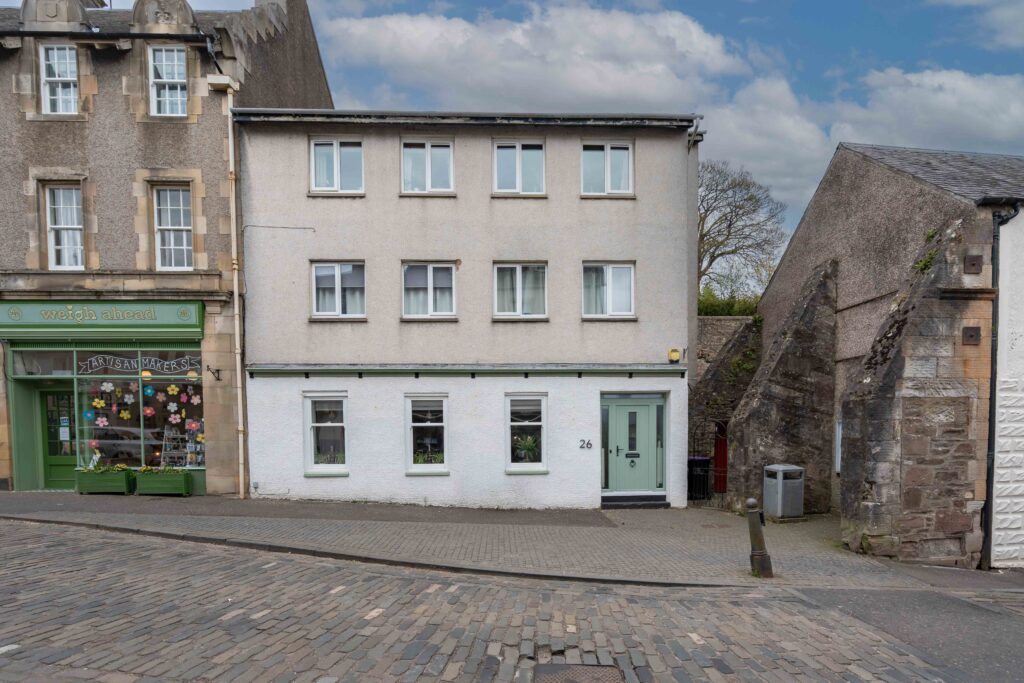
Our listing at 26 High Street, Dunblane is a two-bedroom main door apartment in the centre of Dunblane, currently marketed at Offers Over £165,000.
If a first-time buyer purchased at £165,000, a 5% deposit would be:
£165,000 x 5% = £8,250
A £10,000 contribution would therefore be more than the equivalent of a 5% deposit at that purchase price.
If the full £10,000 was provided as a shared-equity contribution against a £165,000 purchase price, the Government’s equity share would be approximately:
£10,000 ÷ £165,000 = 6.06%
This is only an illustrative calculation, and the buyer would still need to satisfy lender requirements, scheme eligibility and any other purchase costs.
Example 2: 50 Hoprig Avenue, Blindwells — Fixed Price £255,000
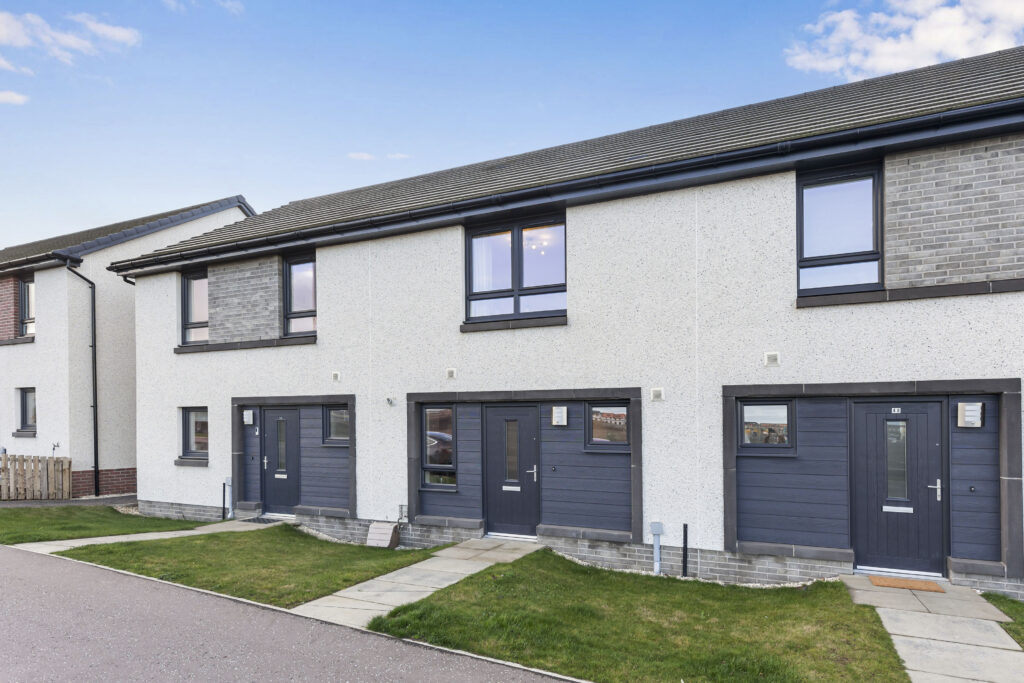
Another current example is 50 Hoprig Avenue, Blindwells, a brand new two-bedroom Ogilvie Home within the Blindwells development, marketed at Fixed Price £255,000.
At that price, a typical 5% deposit would be:
£255,000 x 5% = £12,750
A £10,000 contribution would be equivalent to a substantial part of that 5% deposit.
If the full £10,000 was provided as a shared-equity contribution against a £255,000 purchase price, the Government’s equity share would be approximately:
£10,000 ÷ £255,000 = 3.92%
Again, this is an example only. The actual amount a buyer needs to contribute will depend on the final scheme rules, their mortgage lender’s requirements, their personal circumstances and the total purchase costs.
A few important points to remember
The First Homes Fund contribution is helpful, but it is not the only cost to consider when buying a home.
First-time buyers should also budget for legal fees, registration dues, search costs, lender-related costs, moving costs and any applicable LBTT. First-time buyer LBTT relief may be available, but the amount payable depends on the final purchase price.
It is also important to remember that “Offers Over” properties may sell above the asking price, particularly where there is strong interest or a closing date. The scheme cap refers to property value, so buyers should speak to their solicitor and mortgage advisor before offering to make sure the purchase remains within the scheme criteria.
Should first-time buyers start looking now?
Yes. Although applications are not expected to open until the end of June, buyers can use this time wisely.
That means speaking to a mortgage advisor, getting an agreement in principle, understanding your budget, reviewing available properties and speaking to a solicitor before offering. If demand is high, as it has been with previous first-time buyer schemes, being prepared early could be a real advantage.
At Monarch Legal, we can help first-time buyers understand the legal process, review home reports, note interest, submit offers and guide them through the conveyancing process from start to finish. We can also put you in touch with a recommended mortgage advisor.
If you are hoping to buy your first home and would like to understand how the First Homes Fund could fit into your plans, please get in touch with our team.
You can view our current properties for sale here:
https://monarch-legal.co.uk/